Plans for gas station at historic Houston church site withdrawn after residents object
Lila Mendez has spent over 15 years in local journalism, honing her skills at the Houston Chronicle and NPR’s Houston affiliate. A graduate of the University of Houston, she excels in connecting with the community and has a knack for unearthing stories that highlight the diverse voices of Houston's neighborhoods.
More from Lila →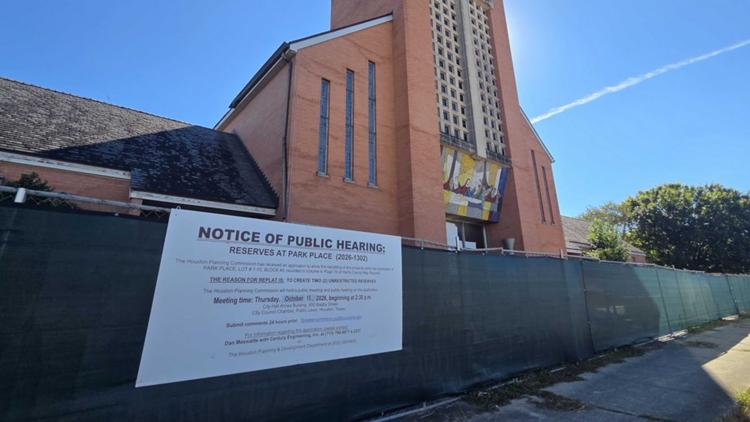
In this story
The warm glow of community unity shone brightly in Houston this week, as residents rallied to protect a cherished piece of their neighborhood’s history. It was a moment that reminded us all of the power of collective voice and the deep roots that bind families and faith communities together. Imagine the scene: neighbors gathering outside the historic Park Place Methodist Church, their voices echoing a shared hope to preserve more than just bricks and mortar— they fought to safeguard a symbol of faith, tradition, and community identity.
What Happened
Earlier this year, plans emerged to transform the site of the historic Park Place Methodist Church into a gas station. This church, built decades ago in the mid-20th century, stands as a testament to Houston’s rich spiritual and cultural heritage. The church’s iconic ‘Last Supper’ mosaic, a beloved fixture for generations, was set to be demolished as part of the development. The mosaic, crafted by local artisans in the 1960s, has been a visual anchor for the community, symbolizing unity and faith for over 50 years. But the community’s response was swift and resolute.
A city official confirmed that the replat application—an essential step in approving the development—was officially withdrawn after residents voiced strong opposition. The pushback was rooted in a desire to preserve the church’s legacy and maintain the neighborhood’s character. Community members argued that the site is more than just land; it’s a sacred space where families have gathered for worship, celebrations, and life’s milestones for over half a century. The church has also served as a hub for community outreach, youth programs, and cultural events that fostered neighborhood cohesion.
Community Reaction
Local residents, many of whom have deep family ties to the church, organized peaceful protests and submitted petitions with hundreds of signatures. For them, the church’s ‘Last Supper’ mosaic isn’t just art—it’s a symbol of faith and unity that has stood the test of time. “This church has been a cornerstone of our community,” said Maria Lopez, a longtime parishioner who has attended services here since childhood. “It’s where my children were baptized, and where my parents found comfort during difficult times.”
The Heart of the Neighborhood
Many community members expressed concerns about losing a tangible link to their heritage. They emphasized that demolishing the church would erase a piece of Houston’s spiritual fabric. Preservation advocates also pointed out that the church’s architecture and mosaics are irreplaceable and should be protected under local historic preservation laws. The effort to save the church reflects a broader movement across Houston to honor its diverse history and celebrate the enduring strength of faith-based communities. Local historian Dr. James Carter, who has studied Houston’s architectural history for over 30 years, noted that the church’s design is a rare example of mid-century ecclesiastical architecture that deserves recognition and protection.
What's Next
With the withdrawal of the replat application, the future of the site remains uncertain. Community leaders are now calling for discussions with city officials and developers to explore alternative options that could preserve the church’s historic elements while allowing for responsible development. There is hope that a compromise can be reached—one that respects both progress and tradition. Some residents suggest that the church could be integrated into a new development plan, perhaps as a community center or cultural space, ensuring its legacy endures.
Meanwhile, the residents’ victory underscores the importance of community engagement and the enduring power of faith and family. As Houston continues to grow and evolve, stories like this remind us that behind every building, every mosaic, and every brick, there are lives intertwined with faith, love, and the American dream of a better tomorrow. Local preservation groups and faith communities are now rallying to ensure that the church’s legacy remains intact for future generations. Notably, the Houston Preservation Alliance has increased its efforts in recent years to identify and protect historic sites like this one, emphasizing the importance of community-led preservation initiatives.
Looking Ahead
City officials have expressed their commitment to working closely with residents and preservationists to find a solution that honors the community’s wishes. The hope is to develop a plan that respects Houston’s history while accommodating responsible growth. This incident highlights the ongoing challenge many cities face: balancing development with the preservation of their unique cultural and spiritual landmarks. The city’s planning department has scheduled a series of public forums over the coming months, inviting residents to share their ideas and concerns about the future of the site.
For families and faith communities in Houston, the message is clear—when they stand together, their voices can shape the future. As the city moves forward, it’s vital that development respects the stories and faith that have built this vibrant community. The church’s story may not be over yet, but one thing remains certain: the bonds of faith and family continue to be the foundation of Houston’s resilient spirit. Local leaders have also indicated a desire to incorporate more community input into future development projects, recognizing that preserving cultural landmarks is essential to maintaining Houston’s diverse identity.
Community Leaders Speak Out
Pastor Samuel Johnson of the nearby First Baptist Church expressed his support for preservation efforts, emphasizing that faith communities are vital to Houston’s social fabric. “Our city is built on stories like this,” he said. “We must find ways to grow without losing what makes us unique.” Local activist groups are also mobilizing to ensure that similar situations are addressed proactively in the future, advocating for stronger protections for historic sites before development plans are finalized.
What This Means for Houston
This episode underscores the importance of community involvement in urban planning. As Houston continues to expand, the challenge will be to integrate growth with the preservation of its rich history. The story of the Park Place Methodist Church is a reminder that progress should honor the past, not erase it. The community’s successful effort to halt demolition demonstrates that residents’ voices matter and that collective action can influence city decisions.
As the city moves forward, local officials are encouraged to foster more inclusive planning processes that prioritize historic preservation alongside economic development. The hope is that future projects will reflect Houston’s diverse cultural tapestry, ensuring that landmarks like the church remain a part of the city’s living history.
For now, the community’s victory provides a blueprint for other neighborhoods facing similar challenges. It reinforces the idea that preserving history is not just about protecting old buildings but about safeguarding the stories, faith, and identities that shape Houston’s character. As residents celebrate their hard-won success, they also look ahead, eager to participate in shaping a city that honors its past while embracing its future.