Community
Shane James Jr. trial: Police interview video shown on Day 6
By Dylan Carter
Advertisement · Why this ad?
Sofia Morales specializes in covering tech policy and its implications for the community. A graduate of UT Austin with a focus on Political Science, she has experience writing for local government publications and tech advocacy groups for 6 years.
More from Sofia →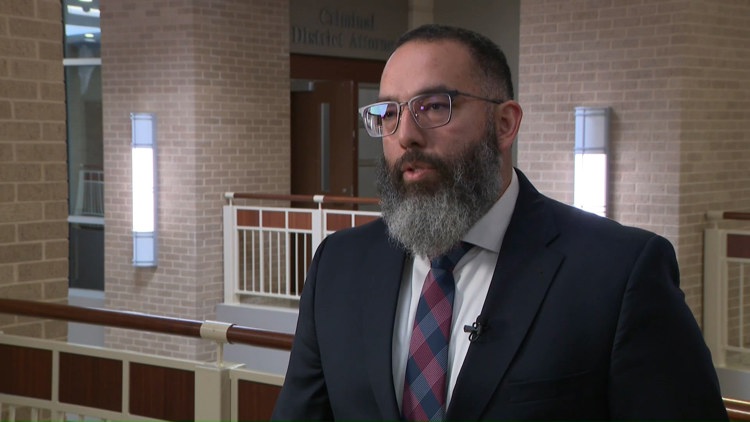
On a bright Tuesday morning in Hays County, a sense of renewed purpose filled the air as Alfonso Salazar addressed a gathering of supporters and community leaders. Clad in a sharp suit, Salazar’s confident stance reflected not just victory but a profound commitment to serve his community with integrity. His words resonated deeply with families, educators, and faith leaders who see in him a beacon of hope for a safer, more just future. This moment marks a pivotal shift in Hays County’s approach to justice, rooted in a vision that emphasizes rehabilitation, family stability, and community healing.
Alfonso Salazar, a seasoned attorney and advocate for juvenile reform, has officially secured the position of Hays County District Attorney, succeeding Kelly Higgins. The election results, finalized last week, reflect a community eager for change—particularly in how juvenile offenders and specialty courts are managed. Salazar’s campaign centered on reforming juvenile justice, reducing recidivism, and expanding programs that support families in crisis. His victory signals a shift toward a more compassionate, community-oriented approach, emphasizing restorative justice over punitive measures.
Salazar’s priorities are clear: he aims to overhaul juvenile justice policies and bolster specialty courts that address mental health, substance abuse, and family issues. These courts, designed to divert non-violent offenders from traditional incarceration, are crucial in fostering long-term societal stability. His plans include increased funding and partnerships with local nonprofits to create more accessible, effective programs that keep families together and promote authentic faith-based rehabilitation.
The community’s response has been overwhelmingly positive, with local leaders praising Salazar’s vision for a more humane justice system. Pastor Mark Evans from First Baptist Church expressed hope that Salazar’s leadership would reinforce the importance of strong families and community values. “A justice system rooted in faith and forgiveness can transform lives,” Evans remarked. Many residents see this as an opportunity to rebuild trust in local government and to prioritize the well-being of children and families.
Maria Lopez, a mother of three and a volunteer at a local youth center, shared her optimism. “We need someone who understands that behind every juvenile case is a family, a child who deserves a second chance,” she said. Her sentiment echoes the broader community desire for policies that promote healing and stability rather than harsh punishment. Local educators also see Salazar’s focus on juvenile justice as a step toward reducing dropout rates and preventing youth involvement in crime, fostering a healthier, more resilient community.
Hays County, nestled just south of Austin, has experienced rapid growth over the past decade. With this expansion, however, comes increased challenges related to juvenile crime, mental health issues, and the need for more comprehensive community services. The county’s diverse population includes long-time residents, newcomers, and a vibrant immigrant community, all of whom stand to benefit from a justice system that emphasizes rehabilitation and community support.
Many families in Hays County have voiced concerns about the school-to-prison pipeline, a phenomenon where youth from marginalized backgrounds are disproportionately funneled into the criminal justice system. Local organizations like the Hays County Youth Alliance have long advocated for more restorative practices, mentorship programs, and mental health services. Salazar’s election is seen as a validation of these efforts and a step toward addressing systemic inequities that have historically affected vulnerable populations.
Furthermore, the county’s economic growth has brought new opportunities but also increased pressures on law enforcement and social services. Hays County Sheriff Gary Cutler, who has worked closely with local agencies, has expressed optimism about collaborative efforts under Salazar’s leadership. “We’re all in this together,” Cutler said. “A focus on prevention and community engagement will help us build safer neighborhoods for everyone.”
Looking ahead, Salazar’s immediate goals include forming a task force to review current juvenile policies and expanding existing specialty courts. He plans to collaborate with community organizations, faith groups, and law enforcement to develop programs that address root causes of juvenile delinquency, such as poverty, lack of mentorship, and family instability. His leadership is expected to bring a renewed focus on restorative practices, emphasizing accountability and faith-based support systems that align with community values.
Additionally, Salazar has expressed a commitment to transparency and community engagement. He intends to hold regular forums to listen directly to residents’ concerns and to ensure that the justice system reflects the community’s moral and spiritual priorities. His approach aims to foster unity, restore trust, and uphold the American ideals of strong families and authentic faith—cornerstones of a thriving society. As Hays County embarks on this new chapter, residents are hopeful that these reforms will lead to safer neighborhoods and healthier families, built on the principles of faith, commitment, and community service.
Alfonso Salazar’s background is rooted deeply in Hays County. Raised in San Marcos, he attended local schools before earning his law degree from the University of Texas at Austin. His career has been marked by a focus on juvenile justice reform, working with nonprofits and community groups to develop diversion programs and mental health initiatives. Known for his empathetic approach and unwavering dedication, Salazar has been a vocal advocate for policies that prioritize healing over punishment.
His personal story resonates with many in the community. As a son of immigrant parents, he understands the importance of community support and faith in overcoming adversity. His work has often intersected with local churches, schools, and social service agencies, making him a familiar and trusted figure in Hays County’s ongoing efforts to improve juvenile outcomes.
Salazar has already outlined plans to host town halls and listening sessions across Hays County. These forums will serve as platforms for residents to voice concerns, share ideas, and participate in shaping juvenile justice policies. His administration also aims to partner with local businesses and civic organizations to fund mentorship programs, after-school activities, and mental health resources.
In the coming months, expect to see new pilot programs designed to divert youth from the criminal justice system and connect them with community-based services. These initiatives will prioritize early intervention, family engagement, and culturally sensitive practices that respect the county’s diversity. The goal is to create a model of juvenile justice that can be replicated across Texas, emphasizing compassion, accountability, and community partnership.
Alfonso Salazar’s victory marks a new chapter for Hays County — one rooted in hope, reform, and community resilience. His focus on juvenile justice and specialty courts aligns with the community’s desire for a system that heals rather than punishes, fostering healthier families and safer neighborhoods. As residents rally behind his leadership, the future looks promising for a county committed to justice that reflects its diverse and vibrant community values.
By Dylan Carter

By Sofia Morales

By Carmen Silva
By Monica Ramirez